
Marble floors have always been a top choice for Singapore homeowners. The natural veining, the cool surface underfoot, and that timeless quality make marble a serious investment, and one worth taking care of properly. But there is one question that comes up constantly: do you need to polish your marble floors, seal them, or both? A lot of people assume these two treatments are interchangeable. They are not. They perform completely different functions, and mixing them up can lead to ineffective results or unnecessary expense.
Understanding the distinction is important not just for appearance, but also for long-term durability. The condition of your floor determines which treatment is required at any given time. In many cases, both are needed, but in the correct sequence and for different reasons. Here is a clear breakdown of what each one actually involves and what your floors most likely need.
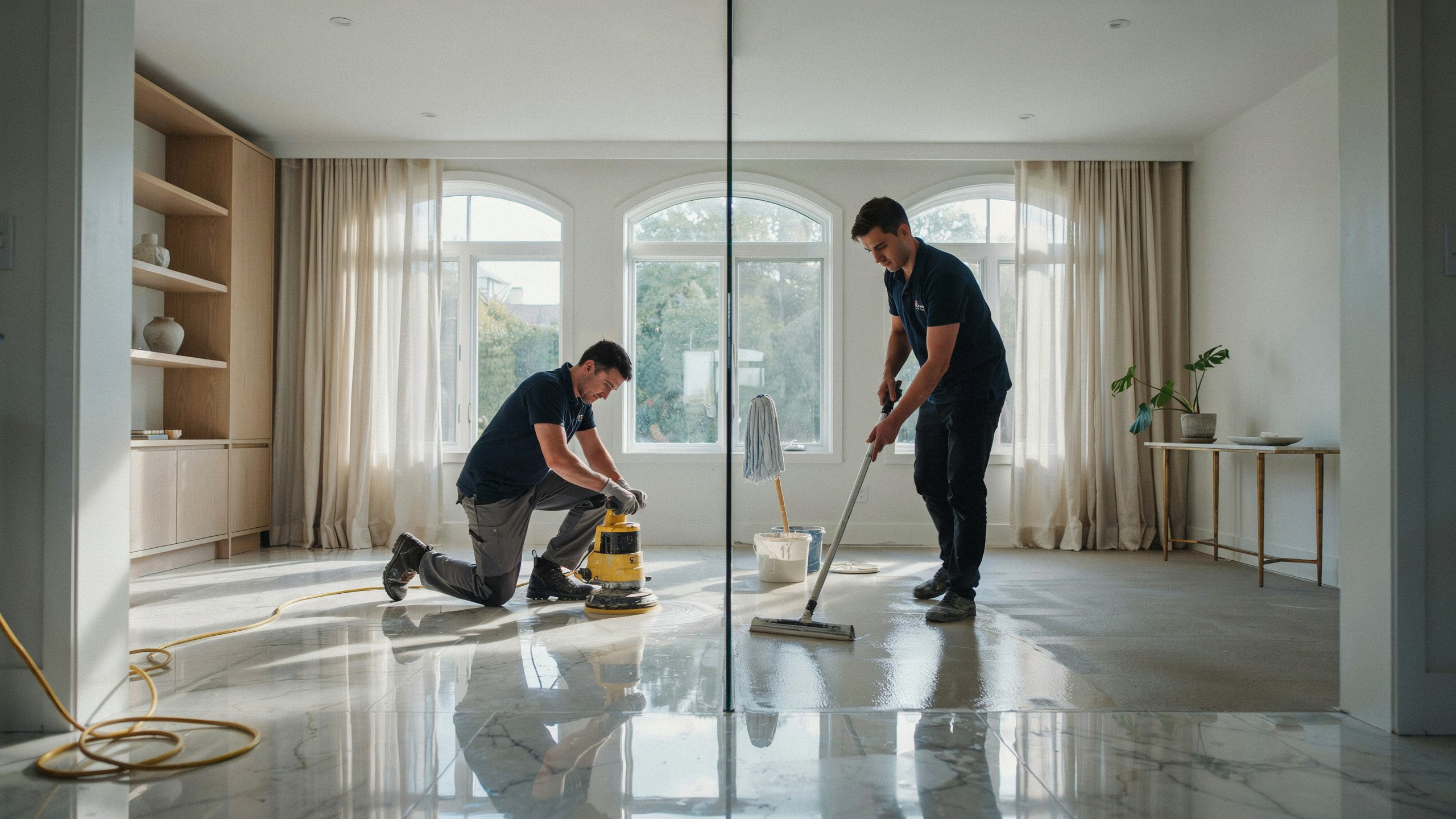
Marble floor polishing is a restorative process designed to restore the natural shine of stone that has been dulled by foot traffic, dust, and daily use. Over time, microscopic surface scratches accumulate and reduce the stone’s ability to reflect light, causing it to appear dull and worn. Polishing addresses this by using abrasive methods to gradually smooth the surface and restore its reflective finish.
In Singapore, professionals typically use either crystallisation or diamond polishing techniques. Crystallisation involves a chemical reaction that enhances surface gloss, while diamond polishing uses graded abrasive pads for deeper refinement. The outcome is a smoother, brighter surface with improved clarity and colour. However, polishing is purely aesthetic and does not protect against stains or moisture.
Marble is naturally porous and can easily absorb liquids if left untreated. In Singapore’s environment, this often leads to staining and long-term deterioration. Sealing is a protective treatment that involves applying a penetrating solution that enters the stone’s pores and reduces absorption. A properly applied sealer is invisible and does not alter the appearance of the marble. Its function is protective. Spills, oils, and liquids remain on the surface longer, allowing them to be wiped away before they penetrate the stone. This significantly reduces staining risk and simplifies maintenance.
Professionals recommend penetrating sealers over topical coatings due to their durability and ability to work within the stone. Depending on usage and maintenance, sealing typically remains effective for one to three years. It should always be applied after polishing, as polishing removes any existing sealer layer.
Many homeowners use these two terms interchangeably, but as with any professional floor polishing, polishing and sealing address completely separate problems. One restores what has been lost, the other protects what remains. The table below shows exactly how they differ across every practical consideration.
| Feature | Marble Floor Polishing | Marble Floor Sealing |
| Primary purpose | Restore shine and remove surface damage | Protect stone from stains and moisture |
| How it works | Abrasive or chemical refinishing of the stone surface | Penetrating sealant fills the stone's pores |
| Effect on appearance | Dramatically improves gloss and clarity | Penetrating sealant fills the stone's pores |
| Protects against stains | No | Yes |
| Removes scratches | Yes | No |
| Frequency required | Every 1 to 3 years depending on wear | Every 1 to 2 years depending on usage |
| Best done when | Floor looks dull, scratched, or hazy | After polishing, or annually as maintenance |
| DIY suitable | Not recommended | Limited, professional application preferred |
Marble floors can look similar on the surface, but the underlying issue is not always the same. Some problems come from surface wear, while others are due to lost protection within the stone. Understanding the difference is important before deciding on treatment. Most marble floors in Singapore benefit from both treatments at some point, but what you actually need right now depends on the state of your floor.
Singapore's humidity is more demanding on marble than most people realise. Sealers break down faster in high moisture environments, and homes with air conditioning running consistently can create temperature differences that cause subtle condensation on stone floors over time. Coastal properties face the added issue of salt in the air gradually working on natural stone. For most residential marble floors in Singapore, a professional polish every two to three years is reasonable. Sealing should happen more regularly, roughly every one to three years, with a simple check in between to see whether the sealer is remaining effective.
That check is easy to do at home. Pour a small amount of water onto the marble surface. If it sits and beads up, the sealer is holding. If the water absorbs into the stone within a few minutes and leaves a visibly darker wet patch, the sealer has worn through and needs to be reapplied. For commercial properties, offices, and any space with heavy footfall, both schedules should be tightened considerably. Some commercial marble floors in Singapore need annual polishing just to stay in acceptable condition.
Well-maintained marble flooring can transform a space, but preserving that finish requires skilled treatment. Magic Build has built a strong reputation for providing marble floor polishing services in Singapore, working across both residential homes and commercial spaces. Our team handles all marble types, from locally common stones to premium imported varieties, and their approach is based on an actual assessment of the floor rather than a standard package applied regardless of condition.
What homeowners appreciate most is honest advice. Whether your floor needs a simple sealer top up or the full polish and seal combination covered above, that's exactly what gets recommended, never more than what the floor actually requires. This honesty, paired with consistent results and experienced technicians, is why Magic Build is trusted for marble floor care in hundreds of homes across Singapore.
Whether your floors need polishing, sealing, or a full programme covering both, Magic Build delivers the complete treatment under one roof. Get in touch to book a site assessment and find out exactly what your marble floors need.


Subscribe to our newsletter to get inbox notifications