Your aircon starts up, runs briefly, and shuts off before the room has cooled properly, then restarts a short while later. If the cycle keeps repeating, your electricity use can rise, the room stays uncomfortable, humidity is harder to control, and key components wear out faster. Understanding what aircon short cycling is and how it can affect the system helps you spot the pattern early, trace the likely cause, and decide when to call a technician.
What Is Aircon Short Cycling?
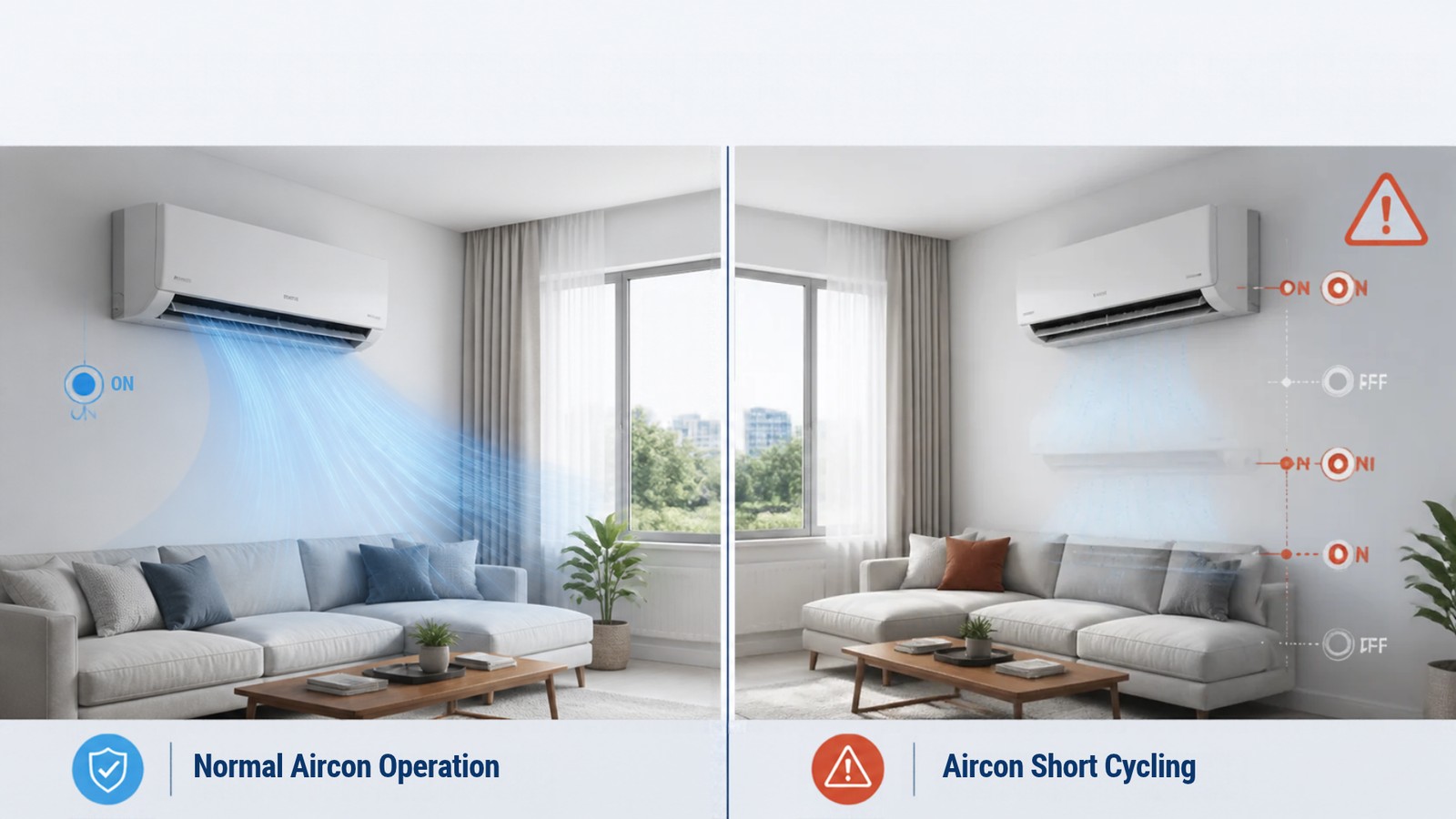
Aircon short cycling means the cooling cycle ends unexpectedly and the system restarts before the cooling demand has been properly cooled. The issue is not simply how long one cycle lasts, but whether the system repeatedly stops before reaching a comfortable condition.
In standard operation, the unit runs for a sufficient time to cool the space and dries it before stopping. It then turns back on when additional cooling is needed. An occasional early shutdown is not necessarily a fault, but repeated premature cycles indicate that something may need attention.
What Are the Common Signs of Aircon Short Cycling?
The clearest sign is an aircon that keeps starting and stopping. It runs for a few minutes, cuts out, then restarts before the room cools. Set it to 24°C, and you may still sit in a bedroom that never gets there, even though the aircon keeps cycling on and off.
Other signs tend to show up alongside it:
- Cooling varies noticeably between different parts of the room.
- The room feels cool but remains humid or sticky.
- The unit takes longer to reach and hold your set temperature.
- Unfamiliar clicking, humming, or start-up sounds appear while it runs.
A single short shutdown is usually nothing to worry about. If the pattern keeps repeating, especially with weak cooling or odd noises, it is worth having a technician check the unit.
What Causes an Aircon to Short Cycle?
Short cycling usually starts with blocked airflow, a wrong temperature reading, a faulty refrigerant or electrical part, or a unit that does not suit the room size. Different faults can look the same, so a proper check helps find the real cause.
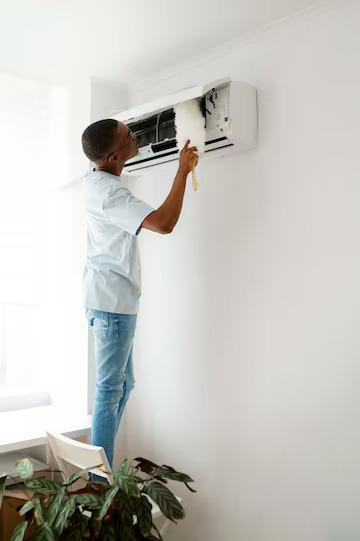
- Dirty air filter. Dust gradually clogs the filter and reduces the air entering the unit. In some cases, the restricted airflow also lets ice form on the coil, which can cause the system to shut down.
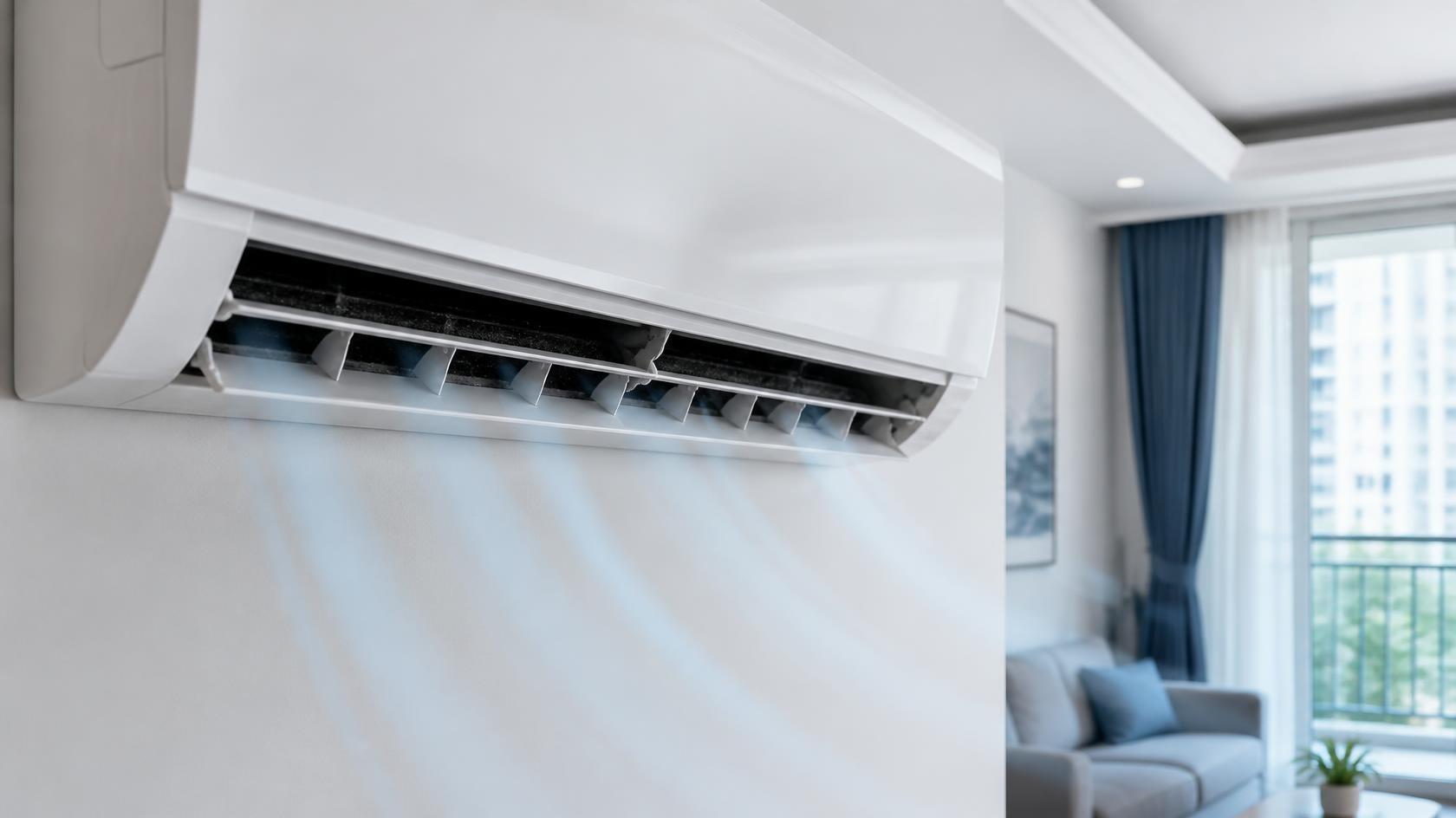
- Blocked vents or coils. Furniture close to the indoor unit, curtains over the air outlet, or dust on the coil can limit airflow. The same applies to the outdoor unit when leaves, debris, or a nearby wall restrict the space around it.
- Thermostat or sensor problems. A faulty temperature sensor may report the wrong room temperature. It will stop cooling even with a warm room.
- Low refrigerant or a leak. Weakens cooling and can lead to early compressor failure. A low level usually points to a leak, so a technician should inspect it.
- Frozen evaporator coil. If there is low air getting through or an issue with the refrigerant, then the inside unit can frost. Once ice covers the surface, air cannot pass through it properly, and the room cools poorly. You may also see water dripping from the unit as the ice melts.
- Electrical faults. A weak capacitor, a faulty relay, a loose connection or a control board issue can interrupt power to the compressor and cause repeated restarts. These carry a shock risk, so leave them to a technician.
- Oversized unit. A unit with more capacity than the room needs cools the area near the sensor quickly, then switches off. The rest of the room may stay warm and humid.
How Can Short Cycling Affect Your Aircon System?
Short cycling increases energy use, reduces humidity, and results in further stress on major components of the air conditioning system. When the compressor starts frequently, it has to deal with a higher load, and energy use increases compared with a properly working system.
The main effects are:
- Higher energy use can lead to a noticeable increase in your electricity bill. Each startup pulls a surge of current, so a unit that keeps restarting tends to use more power than one that runs steadily.
- Poor humidity removal is easy to overlook. The air feels cool, but the coil does not run long enough to pull out much moisture, so a bedroom can still feel sticky at night.
- Increased component wear builds quietly. The compressor carries the heaviest load, with the fan motor and electrical parts close behind.
- More frequent repairs tend to follow. Capacitors, relays, and control boards are among the parts that often fail sooner when a unit restarts constantly.
- Reduced reliability is the long-term result when the cause is never fixed. The unit may keep running for months, then give out during the hottest weeks of the year.
How Can You Prevent Aircon Short Cycling?
Regular maintenance can help prevent many of these problems. Clean filters, clear airflow, correct control settings, and scheduled servicing all help the unit complete its cooling cycles. Dealing with small issues early also costs less than repairing a compressor strained by repeated restarts.
Practical steps include:
- Check the filter once a month, and clean or replace it when dust has built up.
- Vents and grilles need space, so move furniture, curtains and storage boxes away from the indoor unit’s air outlet and intake.
- The outdoor unit needs clear space to release heat properly. Remove stored items, leaves, and heavy dirt around it, and avoid blocking the walls or grilles that allow hot air to escape
- Review the thermostat settings if the unit starts working inconsistently, such as stopping before the space has cooled.
- Place the temperature sensor away from direct sunlight, air vents, and heat-producing appliances, such as a sunny window or a kitchen cooker.
- Arrange regular servicing, with a full inspection at least once a year. A technician can often spot a weak capacitor or a small leak before it causes repeated restarts.
- When installing a new aircon, have its capacity checked against the size of the space and the heat it receives. An oversized unit tends to cool quickly and switch off early.
When Should You Call a Professional Aircon Technician?
Call a professional if short cycling continues after you have cleaned the filter and checked the settings. Refrigerant, electrical, compressor, and sizing problems need the right tools and proper training, and some carry a safety risk, so they should be left to a qualified technician.
Arrange a service visit if:
- The unit still stops and restarts every few minutes after the filter is clean, and the thermostat settings are correct.
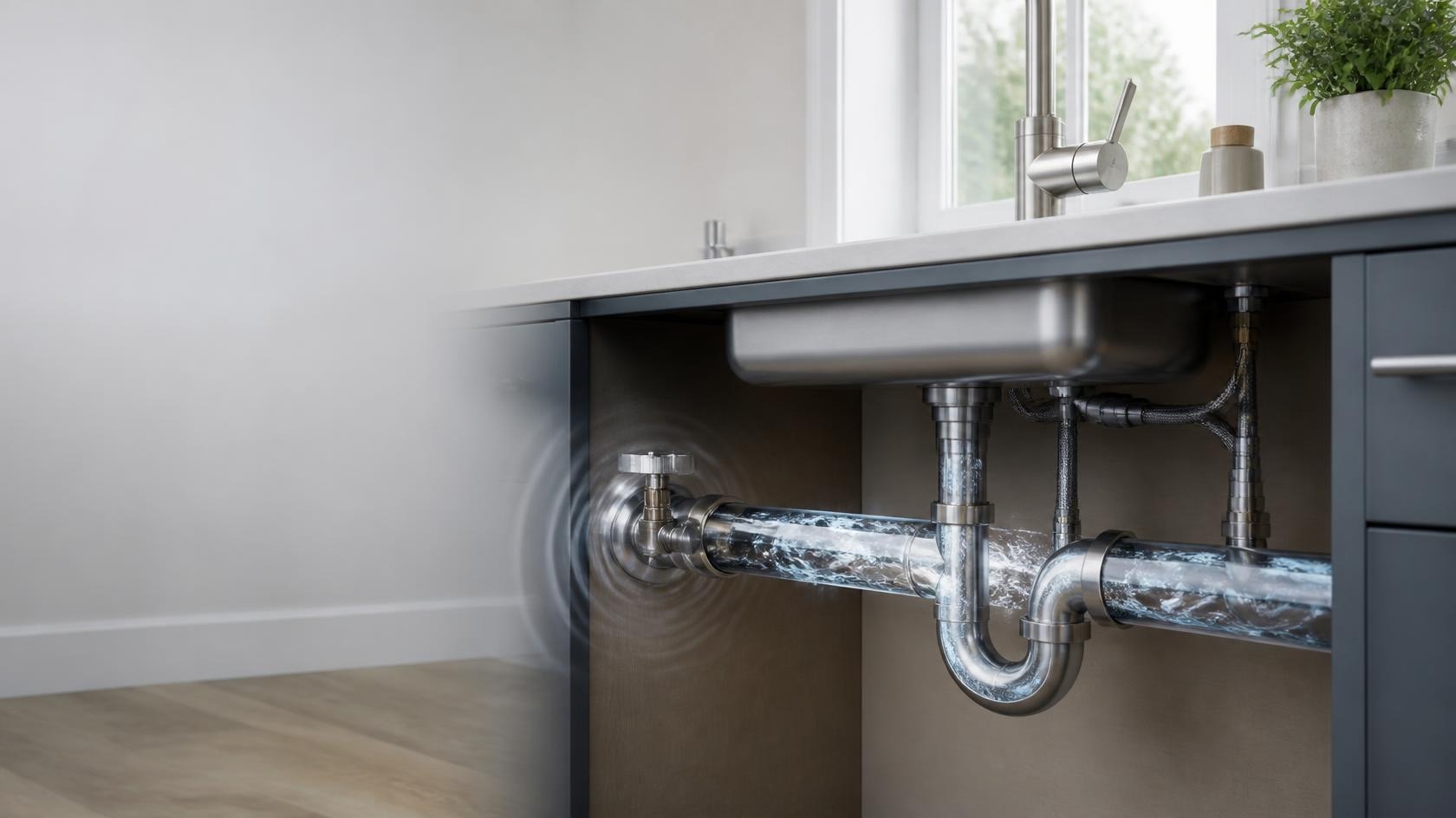
- Ice forms on the indoor unit or the pipes, or water drips onto the floor more than once.
- The circuit breaker trips each time the aircon starts.
- If you notice a burning smell, switch the unit off immediately and leave it off until a technician has inspected it.
- Short cycling begins immediately after installation or continues despite servicing.
Do not add refrigerant yourself. Low refrigerant can indicate a leak, so the cause should be identified and repaired before the system is recharged.
Why Choose Magic Build
At Magic Build, we provide aircon servicing, repair, installation, chemical cleaning, chemical overhaul, gas top-up, and troubleshooting services in Singapore. We assess your system before recommending any work, so you can address the actual cause instead of repeatedly treating the same problem.
If your aircon keeps switching on and off, cools poorly, or shows other unusual signs, our team can inspect the system and recommend the right next step based on its condition.
Read to Know: Why Does an Aircon Have Weak Airflow Even After Cleaning?