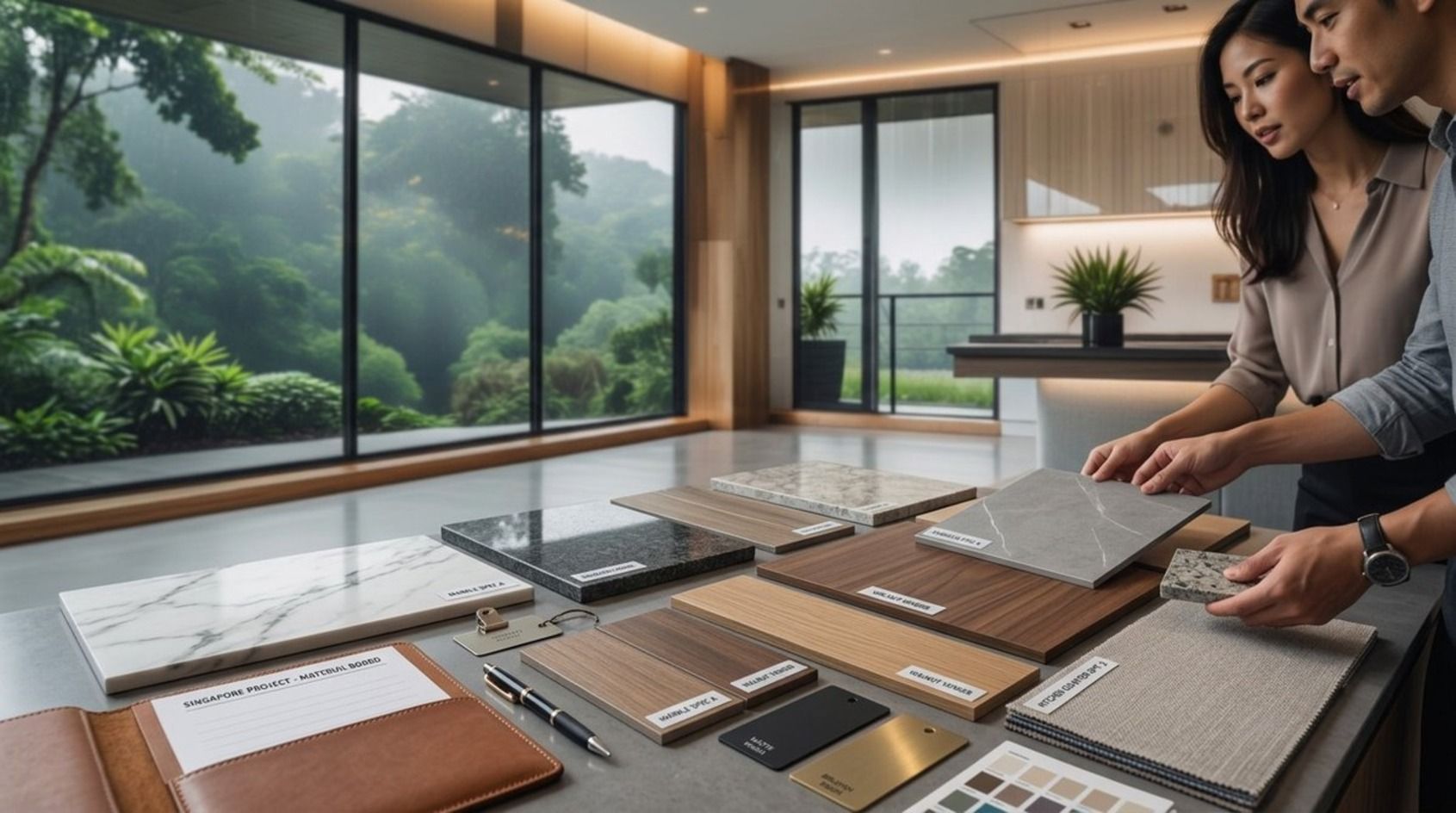
Singapore's heat, humidity and rainfall shape how every renovation material performs over time, and the wrong choice can lead to warping, staining, mould or premature deterioration. This guide walks through what makes our climate demanding, how to choose moisture-resistant materials room by room, which flooring holds up best, and what to look for in walls, paint and wood finishes. We also cover the practical checks worth making before you commit to a final material list, so your renovation services in Singapore deliver results built to last.
Climate is important for Singapore because the materials are not designed to withstand heat, humidity, and heavy rainfall. Timber can move, metal can rust, and moisture behind wall coverings can cause mould in certain conditions. Without this consideration, materials are selected that require more frequent repairs and replacements, increasing long-term maintenance costs.
A few climate factors worth understanding before you shop for materials:
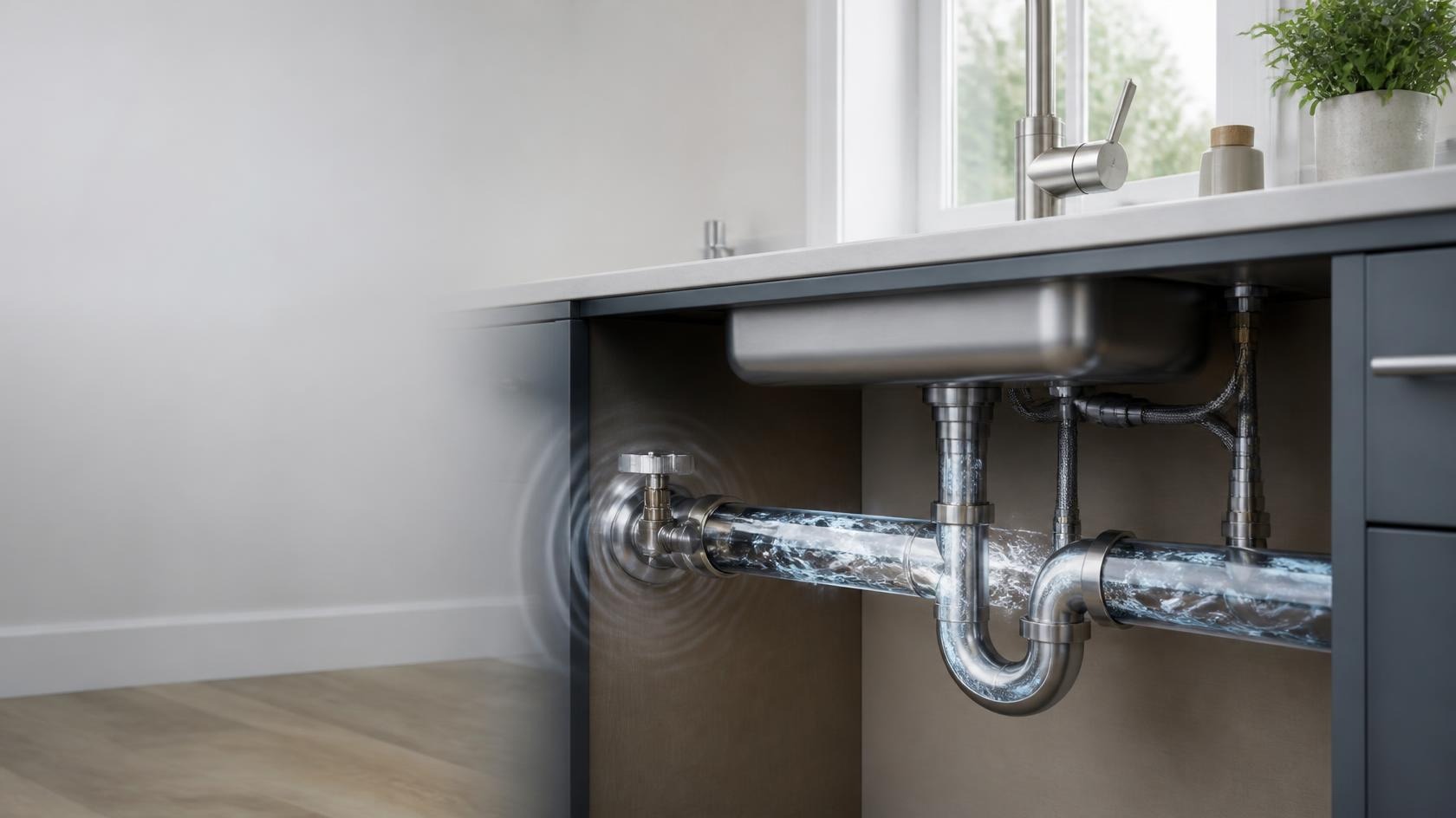
The most appropriate moisture-resistant material will depend on the level of exposure to water in the different areas and not on an application of the same finish throughout the home. Bathrooms need materials suited to direct and frequent water exposure, while kitchens benefit from moisture and stain resistant surfaces. Matching material to room function keeps both performance and cost in check.
Consider these area specific guidelines when planning your material list:
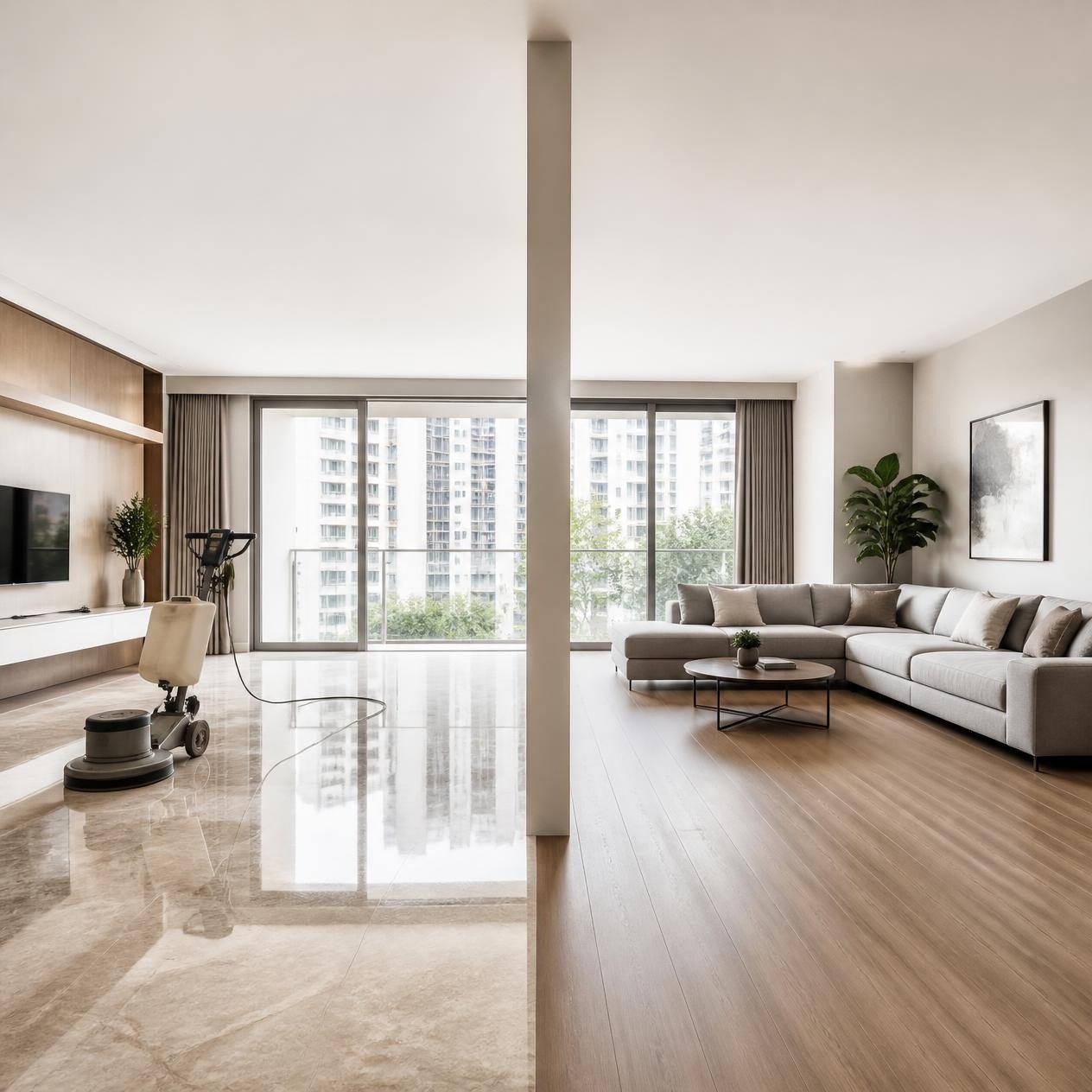
Porcelain tiles, along with some types of vinyl and engineered wood flooring, can be recommended for use in humid Singapore due to their greater resistance to swelling, staining, and warping in comparison with solid wood and basic laminate. The choice of flooring material depends on the purpose of the room, the level of its exposure to moisture and foot traffic, and your preferences regarding appearance. Making the right choice at an early stage will allow you to avoid additional expenses in the future.
A closer look at how common flooring options perform indoors:
The type of paint that should be used on wall surfaces will depend on moisture exposure levels and the condition of the base surface. If the area is humid and prone to mould, then paints that are resistant to moisture and mould can be better suited than regular paints. Wood for carpentry should always be carefully dry, treated and sealed before installation starts.
Keep these points in mind when selecting wall and wood finishes:
Before finalising your renovation materials, consider maintenance requirements, budget and the characteristics of each material in your unit, not just under showroom lighting. A material that looks perfect under the gallery lighting may perform differently when installed near a window where there is direct sunlight in the afternoon.
A few final checks worth making before you commit:
We bring more than five years of industry experience to residential renovation and home improvement work in Singapore. Across Magic Build, we have completed more than 5,000 projects, supported by a team of experienced professionals who understand how our climate affects material performance.
When you work with us, you get straightforward advice on what actually suits your space, not just what's trending. We use high quality materials and ensure they are aligned to your budget, your family, and the requirements of your unit, whether it be an HDB flat, condominium, or landed property.
We maintain transparency in our pricing from the initial quote through to the job being finished. We will work on agreed schedules and update you throughout the project so you will always be aware of the situation.
If you're ready to start a renovation built around what actually works in our climate, reach out to us for renovation services in Singapore designed to hold up well over time.
Read to Know: Why Does Aircon Dust Come Back So Quickly After Cleaning?
Subscribe to our newsletter to get inbox notifications